
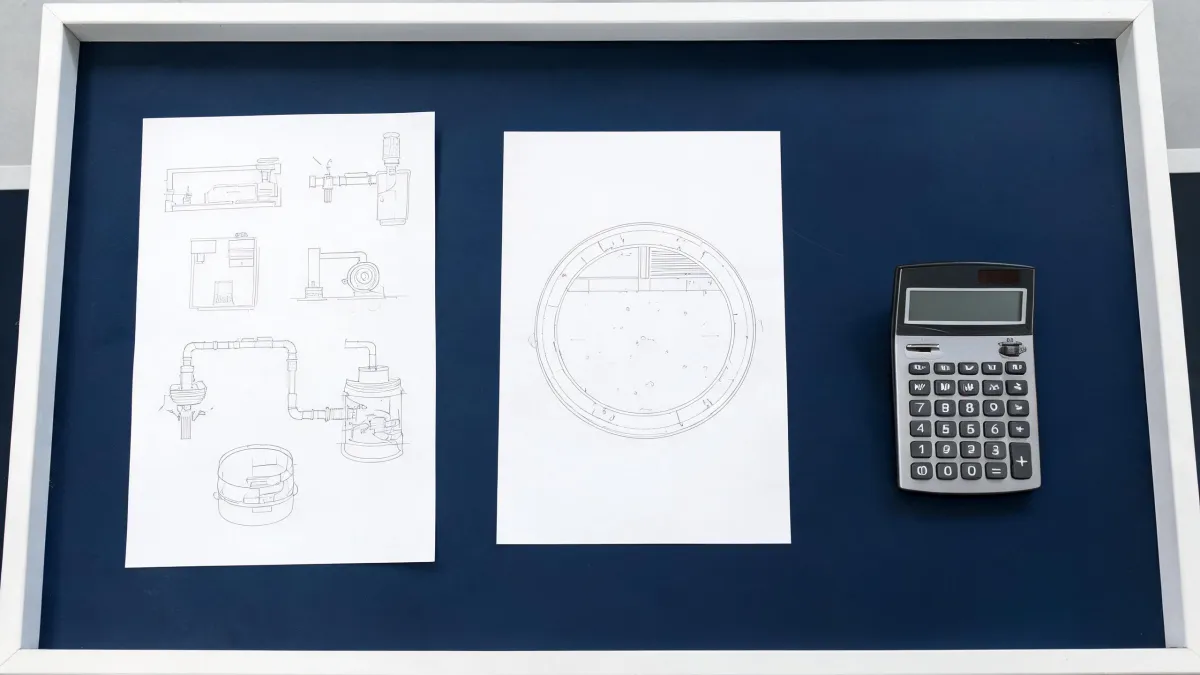
Every tank-based recirculating aquaculture system, whatever the species in it and whatever the tank shape, has to finish four jobs before the water goes back to the fish: remove waste solids, oxidize ammonia and nitrite-nitrogen, remove carbon dioxide, and aerate or oxygenate. That is the whole treatment train, and it does not change with the catalog copy. What changed my own buying judgment is the order. I used to price oxygenators first, because low oxygen is what kills fish fastest. Now I start at the drain, because the drain decides how much work every component downstream has to do.
The first component to improve on most tanks is the solids capture ahead of the biofilter. Not the aerator, not the oxygen cone. That reads backward until you follow the water in the order it actually travels, which is what the rest of this article does: outlet first, then the devices that have to clean up after it, then the last step before the fish.
Check the tank drain before the biofilter
Water leaves the tank at the drain and the overflow, and that exit is the first control point on the whole waste path. I treat the drain, the standpipe and the overflow as treatment components, not as plumbing, and when I walk a tank system I look at them before I look at anything mechanical in the filter room.
Uneaten feed and metabolic byproducts left inside the culture system generate additional carbon dioxide and ammonia-nitrogen, reduce the oxygen content of the water, and work directly against the health of the cultured product. Waste sitting in a dead corner, or drifting past an overflow that never skims the surface, is already doing that damage before the pump moves it an inch. The improvement is unglamorous: get the outlet to move solids out promptly and keep the surface skimming, so the rest of the train receives a lighter, less oxygen-hungry load. Skip it and the biofilter and the gas-exchange stage inherit the difference in every gallon they process.
What I will not do from a general principle is hand you a turnover rate or a drain size. Those follow from tank volume, species and feed loading, and the useful move here is a physical check instead: is there a place in the tank where solids collect and stay, and does anything bypass the outlet rather than leave through it.
Capture solids before biological treatment
Solids first. Mechanical capture belongs ahead of the biofilter, because once fines reach the media they settle into the pore space, and the filter starts treating its own deposits instead of the water.
That order holds whatever equipment you pick. Captured solids also have to leave the system rather than pile up in a sump or a settling chamber where they keep degrading, which makes draw-off and cleaning practice as much a part of the improvement as the device itself. A capture stage that concentrates waste and then holds it has only moved the problem to a slower, warmer place.
The effect to expect is a smaller ammonia and carbon dioxide precursor load arriving at the biofilter, and a smaller oxygen demand arriving at the gas-exchange stage. A capture stage that is undersized, or one that is never drawn off, hands the biofilter a load it was never designed around, and adding media does not fix that.
Treat ammonia on the biofilter surface
Nitrifying bacteria grow on the surface of the biofilter substrate, although all tank production system components will have nitrifying bacteria present to some extent. Operators tend to skip that second half. A biofilter is not the only wet surface in a building carrying nitrifiers; it is the surface you deliberately gave the most protected area and the best contact, and that distinction is what you are actually buying.
So the improvement is about surface and contact, not about media volume. I check whether the flow entering the biofilter passes over the substrate or around it, and whether the media surface is blinded by solids carried over from upstream. When flow bypasses the media, or the surface is coated, the bacteria keep their appetite and lose usable area, and ammonia and nitrite oxidation is the first thing to stall.
Fix the contact and clear the blinding, and the nitrifiers get their surface back, which makes the oxidation step less likely to fall behind. Contact is also the part you can inspect without instruments: where the inlet discharges, whether the media sits in flow or in a dead zone, and whether the surface is coated.
Strip carbon dioxide before oxygen addition
Degassing drives carbon dioxide out; oxygenation pushes oxygen in. Those two gas jobs sit next to each other in the train and get bought as if they were interchangeable. They are not, and a weak degasser is not repaired by a larger oxygen supply.
Waste that is still in the water when it reaches the gas-exchange stage has already shifted the gas balance that stage is meant to correct, so the equipment looks inadequate when the water is the problem. The improvement is to confirm that degassing or aeration happens ahead of oxygen addition, and that waste is not accumulating upstream of it. Do that and less carbon dioxide carries into the oxygen stage, and the oxygen demand you calculate reflects the water rather than the sludge.
The check is about order and function, not about a setpoint: which unit in this train is designed to strip carbon dioxide, which one is designed to add oxygen, and whether the water meets them in that sequence.
Oxygenate the return water last
Aeration or oxygenation is the final treatment function before water returns to the fish, which is exactly why it should be the last thing you change. Waste left in the system lowers oxygen content and hits fish health directly, so an oxygen stage that looks undersized is often a symptom of an upstream stage that is not doing its job.
Check final aeration or oxygenation only after solids capture, biofilter oxidation and carbon dioxide removal have been walked in that order. If those are weak, the oxygen system is paying for the waste, and money spent there buys compensation rather than treatment. Do the upstream work first and the final step gets sized against a smaller, more honest demand.
The purchase question is which stage of the walk is overloaded, not which oxygenator is bigger. Ask what the unit is expected to finish, and ask who calculated the demand it is meant to meet.
Walk the full waste path once
One end-to-end walk finds what isolated component checks miss. I start at the tank drain and follow the water: drain and overflow, solids capture, biofilter, carbon dioxide removal, final aeration or oxygenation, then back to the tank. I do not skip a stop because the drawing shows something there; I note what actually exists on the plant, in the order the water meets it.
At each stop I write two things: what the step is supposed to remove or add, and what carries over to the next step if it does not. I check the drain condition. I look for flow that bypasses the media. I find where carbon dioxide removal and oxygen addition really happen. I have found that the label on the drawing and the pipe on the plant are not always the same thing. Then I put the bottleneck in sequence, because the first weak step sets the load for everything after it.
Suppose an operator is deciding between a larger biofilter and a solids-capture upgrade. The walk should settle it: if the media is blinded and the sump is holding sludge, the biofilter is not the constraint, and a bigger one changes the invoice, not the water. That is a planning example, not a measured result from anyone's farm.
What stops the walk is missing data. Species, biomass, feed loading, water chemistry and current commercial costs are not on this page, and they are not guessable from a component list. When those are unknown, stop before specifying capacity or signing for equipment, and get qualified system design and supplier data.
Fix the drain before buying downstream equipment
So the answer sits at the drain. Until the outlet moves waste out and the capture stage takes it out of the water, every downstream figure I would be quoted, whether biofilter volume, degasser duty or oxygen demand, is measured on water that is still dirty, and I would be buying capacity to treat sludge. Fix the outlet and the capture stage first, then re-walk the rest of the train. That order is the cheapest thing on this page, and the only one where the last component you buy is the one you actually needed.
